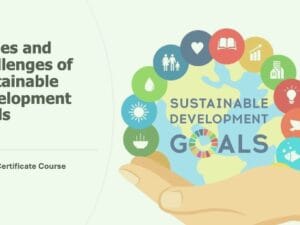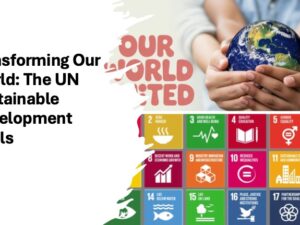
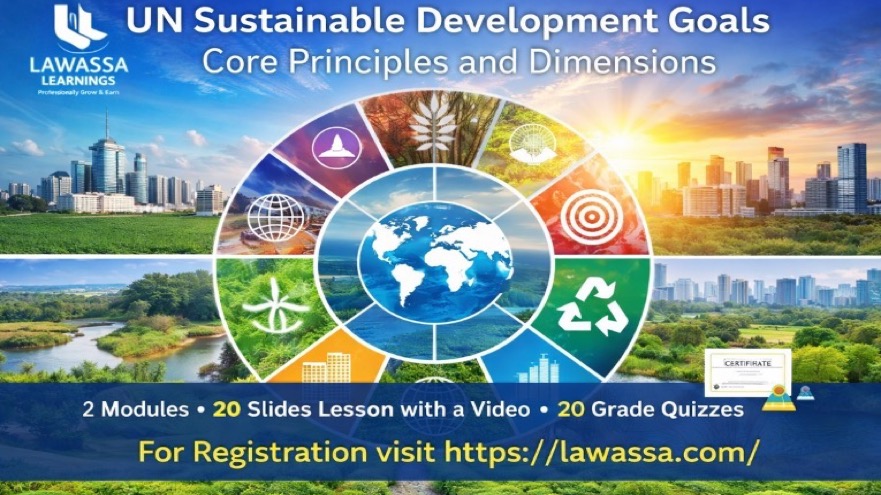
The United Nations Sustainable Development Goals (SDGs), adopted in 2015 as part of the 2030 Agenda for Sustainable Development, comprise a universal framework of 17 interconnected goals and 169 targets aimed at eradicating poverty, reducing inequality, and fostering sustainable global development. Rooted in the principle of “leaving no one behind,” the SDGs seek to balance economic growth, environmental stewardship, and social inclusion through an integrated and transformative agenda. The core principles guiding the SDGs include universality, integration, and inclusiveness. Universality implies that the goals apply to all countries—developed and developing alike—requiring collective global action and local adaptation. Integration emphasizes the interdependence of the goals, encouraging policy coherence across sectors to address cross-cutting issues such as climate change, gender equality, and health. Inclusiveness ensures that the voices and needs of marginalized and vulnerable communities are prioritized, thereby promoting equity, participation, and social justice. The SDGs are structured around three primary dimensions of sustainable development: economic, social, and environmental. The economic dimension focuses on inclusive growth, decent work, and innovation, aiming to build resilient infrastructure and reduce economic disparities. The social dimension promotes human development through quality education, gender equality, health, and peaceful societies. Meanwhile, the environmental dimension addresses pressing global challenges such as climate change, biodiversity loss, and resource depletion through goals that emphasize renewable energy, sustainable consumption, and ecosystem conservation. The SDGs demand active engagement from governments, civil society, the private sector, and individuals. By aligning national policies and development strategies with the SDGs, countries can foster long-term sustainability and shared prosperity. As an ambitious and holistic framework, the SDGs represent a global commitment to shaping a more equitable, sustainable, and resilient future for all.

Introduction to UN-SDGs Core Principles and Dimensions
The Genesis of Sustainable Development Goals
The Five Core Principles: The 5 P’s Framework
The 17 Sustainable Development Goals.
Social Dimension: Addressing Human Needs
The Economic Dimension: Promoting Inclusive Growth
The Environmental Dimension: Promoting Our Planet
Institutional Dimension: Governance for Sustainability
The Cultural Dimension: The Fourth Pillar
Interlinkages: The indivisible Nature of SDGs

Measuring Progress: Indicators and Monitoring
Implementation Challenges: Resources Mobilization
Implementation Challenges: Policy Coherence
Multi-Stakeholder Partnership: Government Role
Multi-Stakeholder Partnerships: Private Sector Engagement
Multi-Stakeholder Partnerships: Civil Society and Academia
SDGs in National Context: Localization Processes
SDGs in the COVID-19 Context
Future Prospects: 2030 and Beyond
Conclusion: A Call to Action

Summary: Sustainable Development Goals: Core Principles and Dimensions

United Nations Sustainable Development Goals: Core Principles and Dimensions having 2 Modules; 20 Slides Lesson with a Video and 20 Grade Quizzes.
Instruction for Quiz
This certificate course is tailored for learners possessing foundational knowledge who seek to advance their expertise further. It is particularly suited for individuals aiming to deepen their understanding and capabilities within the domain. A prerequisite for enrolment is demonstrable professional experience in the social sector, with specific emphasis on infrastructure-related projects. This ensures that participants are equipped with practical insights and contextual familiarity, enabling them to engage meaningfully with the course content and apply advanced concepts effectively within real-world development scenarios.