
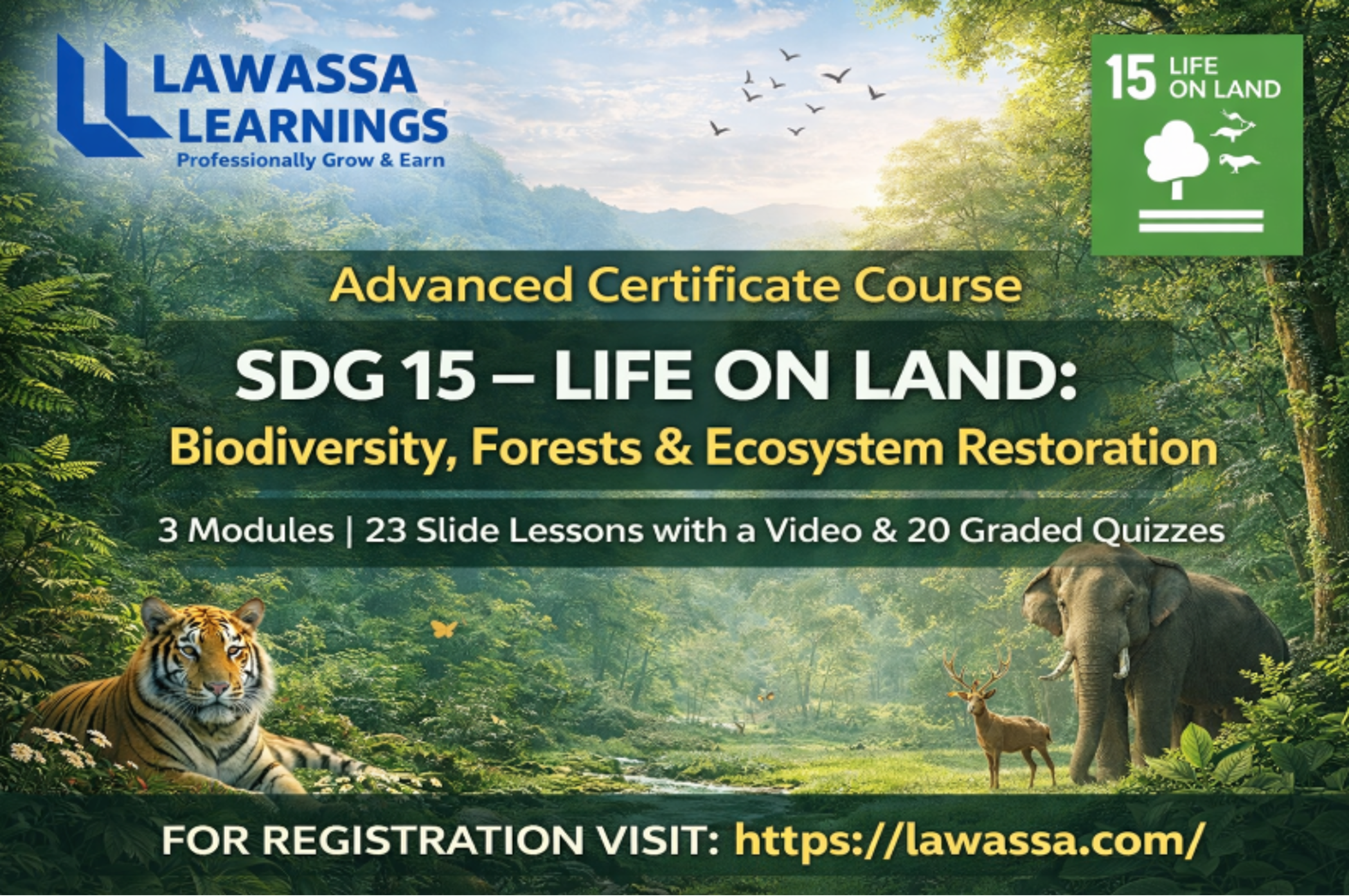
Forests, grasslands, mountains, wetlands, and drylands form the foundation of life on Earth, sustaining biodiversity, regulating climate, supporting livelihoods, and underpinning the world’s ecological balance. Yet these terrestrial ecosystems are rapidly declining under the pressure of deforestation, land degradation, biodiversity loss, invasive species, and the intensifying impacts of climate change. Sustainable Development Goal 15 (SDG 15) calls for urgent global action to protect, restore, and promote the sustainable use of terrestrial ecosystems—ensuring that natural landscapes remain resilient, productive, and life-sustaining for generations to come.
The Advanced Certificate Course on SDG 15: Life on Land – Protecting Earth’s Terrestrial Ecosystems offers a rigorous and comprehensive learning experience for professionals committed to environmental stewardship. This course provides in-depth insights into ecosystem dynamics, biodiversity conservation strategies, climate–land interactions, sustainable forest management, wildlife protection frameworks, and landscape restoration techniques.
Participants will explore global conservation agreements, nature-based solutions, land governance models, and advanced monitoring tools that help measure progress toward SDG 15 targets. Through real-world case studies, interactive modules, and evidence-based methodologies, learners will be equipped to design impactful interventions that strengthen ecological resilience.
Enrol today to become part of a transformative movement dedicated to safeguarding Earth’s land-based ecosystems and securing a sustainable future for all.

1: Introduction
2a: Understanding SDG 15's Core Objectives
2b: The Global Significance of SDG 15
3a: Global Threats to Terrestrial Ecosystems
3b: Global Leaders in SDG 15 Implementation
4a: India's Rich Biodiversity Heritage
4b: India's SDG 15 Implementation Successes

5a: Key Challenges in India's SDG 15 Journey
5b: India's Innovative Policy Framework
6a: Traditional Knowledge Systems in Conservation
6b: Community-Based Conservation in India
7a: Technological Innovations for SDG 15
7b: Corporate Engagement with SDG 15
8a: Climate Change and SDG 15: Interlinked Challenges
8b: SDG 15 and Social Justice
9a: The Economic Case for SDG 15
9b: Financing the SDG 15 Implementation Gap
10: Urban Areas and SDG 15: Unexpected Connections
11: Measuring Progress: SDG 15 Indicators
12: The Path Forward: Priorities for SDG 15 Success
13: Indicator-Based Impact Assessment Framework for SDG 15
14: The Path Forward: Accelerating Action for SDG 15

Summary: SDG 15 Life on Land Protecting Earth's Terrestrial Ecosystem
Sustainable Development Goal 15 (SDG 15) — Life on Land — represents a global commitment to protecting, restoring, and sustainably managing terrestrial ecosystems. Focused on conserving forests, combating desertification, halting biodiversity loss, and reversing land degradation, the goal underscores the indispensable role of healthy land systems in ensuring food security, climate regulation, and the survival of innumerable species, including humanity itself.
Central to SDG 15 is the sustainable management of forests, which function as vital carbon sinks and irreplaceable reservoirs of biodiversity. Yet accelerating deforestation and habitat destruction have placed more than one million species at risk of extinction. To counter these trends, SDG 15 urges nations to strengthen conservation laws, adopt integrated land management approaches, and pursue land restoration at scale. Addressing desertification and rehabilitating degraded landscapes are equally essential, particularly for communities whose livelihoods depend on fragile ecosystems.
India has advanced SDG 15 through extensive afforestation campaigns, biodiversity missions, and participatory forest governance. At the global level, initiatives such as the UN Decade on Ecosystem Restoration (2021–2030) aim to revive ecological balance worldwide. Nonetheless, persistent threats—illegal logging, unsustainable agriculture, and weak enforcement—continue to impede progress.
Ultimately, safeguarding terrestrial ecosystems is both an ecological necessity and a foundation for long-term human prosperity. SDG 15 calls for shared responsibility to protect Earth’s natural heritage and foster a sustainable coexistence between development and nature.
Instructions:
The Advanced Certificate Course on SDG 15: Life on Land – Protecting Earth’s Terrestrial Ecosystems is tailored for learners with strong foundational expertise and professional field experience in land restoration, biodiversity conservation, or SDG 15–related intervention projects. This advanced programme offers an in-depth exploration of terrestrial ecology, sustainable forest management, landscape restoration, climate–land interactions, and strategies to combat desertification and land degradation.
Participants will engage with global conservation frameworks, national policies, and cutting-edge tools for ecosystem monitoring, biodiversity assessment, and land governance. Through analytical case studies, outcome-based evaluation methods, and practical design frameworks, the course enhances learners’ capacity to craft impactful interventions that advance SDG 15 indicators at scale.
Ideal for environmental practitioners, conservation professionals, and development experts, this programme equips participants to drive transformative action across ecosystems and communities—strengthening resilience, restoring degraded landscapes, and safeguarding terrestrial biodiversity for future generations.