
SDG 2: Achieving Zero Hunger – Global Challenges and Solutions
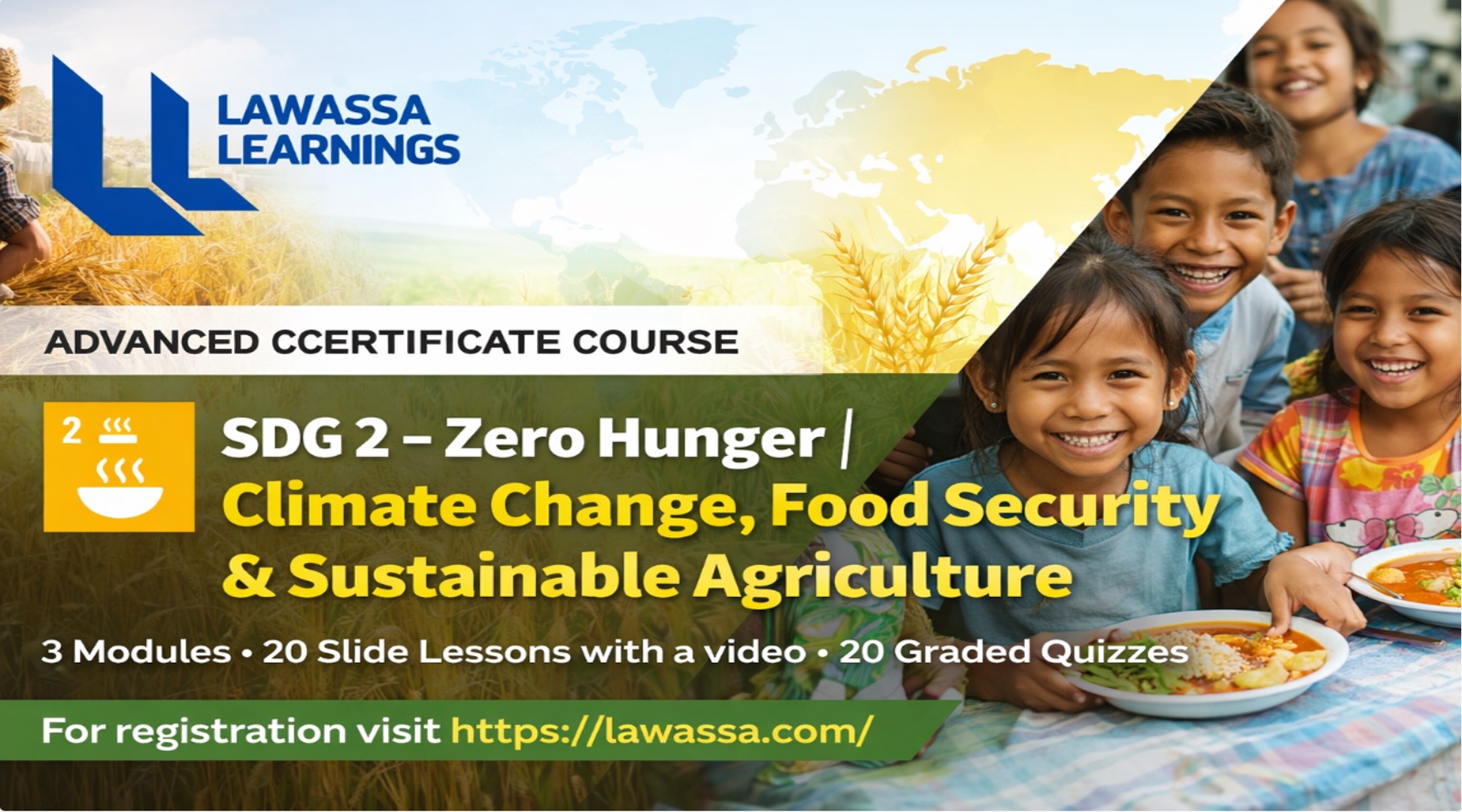
In a world of unprecedented technological progress and plentiful resources, the persistence of hunger remains one of humanity’s most urgent moral and developmental challenges. SDG 2: Achieving Zero Hunger calls for a collective global commitment to end food insecurity, promote sustainable agriculture, and ensure equitable access to nutritious food for all. To empower professionals with the knowledge and strategic insight needed to address these multifaceted issues, our Online Advanced Certificate Course on SDG 2 offers a transformative learning experience designed for emerging leaders, development practitioners, and policy innovators.
This meticulously curated programme explores the structural causes of hunger, the vulnerabilities created by climate change, and the critical role of resilient food systems in supporting sustainable development. Through expert-led modules, real-world case studies, and evidence-based frameworks, learners gain the competencies required to design impactful interventions, strengthen food value chains, and champion inclusive agricultural practices.
By participating in this advanced course, learners not only deepen their mastery of global food security but also position themselves as catalysts of change in shaping a hunger-free world. Join us on this vital journey and contribute meaningfully to the global mission of ensuring that no one is left behind.

1. Introduction
2: Understanding SDG 2: Zero Hunger
3: The Global Hunger Landscape
4: Root Causes of Global Hunger
5 Example of Unique Hunger Challenges
6: India's Hunger Challenge: A Paradox of Plenty

7: Key Factors Driving Hunger in India
8: India's Policy Response to Hunger
9: The Impact of Climate Change on Food Security
10: The Food-Water-Energy Nexus
11: Women's Empowerment and Food Security
12: Urban Food Security Challenges
13: Sustainable Agriculture Approaches
14: Global Governance and Cooperation
15: Indigenous Food Systems and Traditional Knowledge
16: The Path Forward: Transforming Food Systems
17: Key Targets of SDG 2
18: Key Performance Indicators for SDG 2
19: Indicator-Based Impact Assessment Framework for SDG 2
Summary:
20: The Path Forward: Accelerating Progress for SDG 2

Summary:
S D G 2: Achieving Zero Hunger: Global Challenges and Solutions
Sustainable Development Goal 2 (SDG 2), Zero Hunger, envisions a world where every individual has access to safe, nutritious, and sufficient food all year round. Despite significant progress in agricultural productivity, hunger and malnutrition remain pressing global challenges, affecting over 700 million people worldwide. The persistence of food insecurity is linked to multiple factors, including poverty, inequality, conflict, climate change, and unsustainable farming practices.
One of the major challenges is the unequal distribution of food resources. While some regions face chronic undernourishment, others struggle with food waste and overconsumption. Climate change exacerbates these issues by disrupting agricultural cycles, reducing crop yields, and threatening biodiversity. Moreover, geopolitical conflicts and economic instability hinder food supply chains, pushing vulnerable populations deeper into hunger.
Solutions lie in building resilient and sustainable food systems. Strengthening smallholder farmers, especially in developing countries, through access to technology, credit, and markets is crucial. Encouraging climate-smart agriculture, reducing post-harvest losses, and promoting diverse, nutrient-rich diets can help combat malnutrition. Global cooperation is essential to reform trade policies, improve food aid distribution, and reduce waste along the supply chain.
India, along with other key regions, plays a central role in this effort. Programs such as mid-day meals, food security schemes, and nutrition initiatives provide valuable models for tackling hunger at scale. By combining data-driven insights, policy reforms, and community-based action, the world can move closer to eliminating hunger by 2030 and ensuring that no one is left behind.
Instructions:
The Advanced Certificate Course on SDG 2 is meticulously designed for professionals who possess substantial prior knowledge and hands-on experience in poverty-alleviation or food-security initiatives. Tailored for practitioners actively engaged in field-level intervention projects, this programme deepens their understanding of the structural, environmental, and systemic forces that shape global hunger.
Through advanced conceptual frameworks, analytical tools, and evidence-driven methodologies, the course equips learners to critically evaluate intervention models, strengthen programme design, and enhance the outcome indicators aligned with SDG 2. Participants will explore resilient agricultural practices, climate-adaptive strategies, nutrition-sensitive programming, and integrated approaches that reinforce food security across diverse socio-economic contexts.
This specialised learning pathway invites committed professionals to refine their expertise and elevate the impact of their ongoing initiatives. By advancing their competencies, learners position themselves as influential contributors to the global mission of achieving Zero Hunger with measurable, sustainable results.